Impacted Canines Raleigh, NC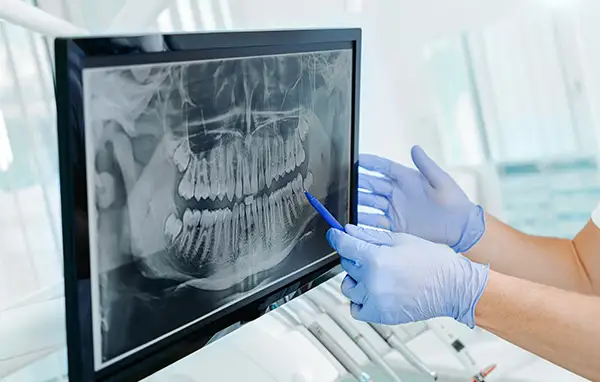 Canine teeth, sometimes called cuspids or eye teeth, are the pointed teeth located toward the front of the mouth, just beside the incisors. These teeth play an important role in biting, tearing food, and guiding the rest of the teeth into proper alignment as the smile develops. An impacted canine occurs when this tooth becomes stuck beneath the gumline and fails to erupt into its normal position on schedule. At Raleigh Family Orthodontics, our doctors frequently evaluate children and teens for this condition, since the upper canines are among the most commonly impacted teeth, second only to wisdom teeth. Canine teeth, sometimes called cuspids or eye teeth, are the pointed teeth located toward the front of the mouth, just beside the incisors. These teeth play an important role in biting, tearing food, and guiding the rest of the teeth into proper alignment as the smile develops. An impacted canine occurs when this tooth becomes stuck beneath the gumline and fails to erupt into its normal position on schedule. At Raleigh Family Orthodontics, our doctors frequently evaluate children and teens for this condition, since the upper canines are among the most commonly impacted teeth, second only to wisdom teeth.Impacted canines are often first noticed during a routine dental checkup, when a dentist observes that a baby tooth has not fallen out on time or that a permanent tooth is missing from its expected position in the arch. Sometimes a parent may notice a small bump or firmness in the gum tissue above where the tooth should be, which can also be a sign that the canine is trapped beneath the surface. From there, a referral to our office allows our dental team to take a closer look, often using imaging to determine exactly where the tooth is located and which direction it is facing. What Causes a Canine to Become Impacted?There is rarely a single cause behind an impacted canine. Instead, several factors can contribute to a tooth becoming stuck below the surface. Understanding these causes can help parents recognize why early evaluation is so valuable.
Because many of these factors are not something a parent can see or prevent, regular dental visits and early orthodontic screenings remain the best way to catch a potential impaction before it becomes a bigger problem. Why Early Detection MattersThe American Association of Orthodontists recommends that children have their first orthodontic evaluation by age seven. At this stage, our doctors can often identify early warning signs of an impacted canine, such as delayed eruption, asymmetry between the left and right sides of the mouth, or a baby canine that has not loosened on its own timeline. Catching a potential impaction early opens the door to more conservative treatment options. In some cases, simply removing a baby tooth that is blocking the path can allow the permanent canine to erupt on its own with guidance from a removable or fixed appliance. Other times, our doctors may recommend creating additional space in the arch to give the canine a clearer path to erupt naturally. The longer an impaction goes unaddressed, the more likely it becomes that the tooth will need more involved treatment to bring it into proper position, so timing plays a significant role in how straightforward the process will be. This is one of the many reasons our team encourages families in the Raleigh area not to skip that early screening appointment. How We Treat Impacted CaninesTreatment for an impacted canine is highly individualized, since every patient's anatomy and the exact position of the affected tooth are different. After a thorough evaluation, which typically includes a clinical exam and diagnostic imaging, our doctors will develop a plan tailored to guide the tooth into its correct place in the smile. In many cases, treatment involves a combination of orthodontic appliances, such as braces, and a minor surgical procedure performed in coordination with an oral surgeon. During this procedure, the gum tissue over the impacted tooth is gently opened, and a small bracket or chain is bonded to the tooth. This chain is then connected to the orthodontic appliance, allowing our doctors to apply a light, steady force that gradually pulls the tooth down into alignment with the rest of the teeth over time. This process requires patience, as it can take many months for the tooth to fully erupt into position. Throughout treatment, our dental team monitors progress closely with regular adjustments, making sure the canine continues moving in the right direction while protecting the health of the surrounding teeth and gum tissue. In more complex cases, our doctors may work alongside your child's general dentist and an oral surgeon to coordinate every step of the process, ensuring nothing is overlooked along the way. What Happens if an Impacted Canine Goes Untreated?While it may be tempting to leave a mildly impacted tooth alone, doing so can lead to a number of complications over time. An impacted canine can put pressure on the roots of neighboring teeth, sometimes causing resorption, a process in which the root structure of an adjacent tooth is gradually worn away. Left in place long enough, an impacted tooth may also form a cyst, which can affect the surrounding bone. Beyond the physical risks, an impacted canine that never erupts can also affect the appearance and function of the bite, sometimes leaving a noticeable gap in the smile or causing surrounding teeth to shift out of place over time. Addressing the issue with the guidance of our doctors helps protect both the health of the surrounding teeth and the long-term function of the bite, while also supporting a more balanced, confident smile. Schedule an Evaluation in RaleighIf your child's dentist has mentioned a delayed or missing canine, or if you simply want peace of mind about your child's developing smile, our team at Raleigh Family Orthodontics is here to help. Early evaluation can make a meaningful difference in how straightforward treatment will be. Call (984) 254-0585 today to schedule a consultation with our doctors and take the first step toward a healthy, well-aligned smile. |
Follow Us |
